Thursday, January 31, 2013

Japan and Globalization


Yesterday, we had the opportunity to meet with representatives from DTT’s Osaka office. Three partners and one senior manager shared their perspectives on the impacts of globalization on Japanese corporations. All four of our hosts had experience working in foreign countries including the U.S. and Indonesia.

They candidly shared with us how Japanese history, social and business culture is impacting Japanese globalization efforts. Historically Japan has been geographically isolated and this isolation has a long historical significance within Japan. Japan's corporate history allowed individuals to be employed for life with one company, especially during times of significant economic growth as in the 1980s. The human resource model used contained specialization areas or tracks which each individual stayed in for the course of his or her career. After the economic downturn, employment for life became less feasible and the nimbleness required to modify human resource models that could better respond to global business environments has been slow to change. 

The two-hour session also provide us with some practical ideas on how to work in U.S. and Japanese projects teams. One of the partners we met with was born in Hawaii and has been living in Japan for 20 years. From his “American” perspective he advised us that as American’s we “don’t know what we don’t know, and the Japanese won’t necessarily tell you.” Developing your ability to “read the air in the room,” and developing a long-term relationship are some strategies that will help.


Written by Joe

A Visit to the Dawn Center and a Focus on Gender Equality

We have met so many amazing leaders throughout our first ten days in Osaka. On Tuesday, it was our distinguished pleasure to meet leaders of the Dawn Center. The Dawn Center is a women's center where each year more than 300,000 women receive a multitude of services and information. Among those with whom we had an engaging discussion was Mr. Tokioka, the chair person of the Gender Equality Foundation.

The foundation has four core purposes:
1. distribute information
2. offer programs and counseling on issues affecting women
3. provide consultation and training programs related to gender equality
4. provide space for lectures/ meetings to groups

Like U.S. non-profit organizations, the Dawn Center is challenged to achieve its goals without sufficient funding, due to an 80% decline in government funding since 2010. Yet the Dawn Center is an essential resource for women in Osaka prefecture. One surprise, recognizing the pride of the Japanese people, is that Mr. Tokioka addressed Japan's Gender Gap Index (GGI) rating, according to the World Economic Forum. Japan is ranked 101 out of 135 countries (Pakistan is ranked 134, followed by Yemen at 135). To contrast this disparity, the U.S. ranked 22. When asked how the Japanese reacted to the GGI result, Mr. Tokioka shared,"Japanese gov't recognizes the situation and would like to increase the number of women working through 2030. But we need to focus more on the purpose, rather than the numbers".

Some of the reasons Mr. Tokioka cited for Japan's gender gap include:
1. Women are not working in an economic forum.
2. Since the Dec. 2012 election, the number of women in gov't (the house) dropped from 11% to 7.9%.
3. There is a 30% gap in wages between men & women. Women have not only a "glass ceiling" but "a glass cliff."
4. Gender issues are complicated due to history and social roles.
He expressed, "The role of Dawn Center is to heighten the awareness and improve the situation."

What makes gender inequality so ironic is that after the Pacific War (WWII) the U.S. worked with Japan to revise its constitution to include "gender equality" verbiage. It appears that the U.S. could do a better job to "model the way" for Japan. The staff at Dawn Center spoke highly of Mrs. Gordon who was influential in promoting the rights of Japanese women. They mentioned that although she recently passed away, she was an advocate throughout her entire life. No one in our program was familiar with Mrs. Gordon. The following link provides more information about her life.

http://www.obitoftheday.com/post/39472973818/beatesirotagordon

Our visit concluded with a visit to Dawn Center's library led by Ms. Kinoshita, the head librarian. Her passion for women's rights and lifetime learning echoed the core of MAOL values. The visit served as a strong reminder for each of us to advocate for social justice.

--Anne Louise Liska


Wednesday, January 30, 2013

A Visit to the Consulate

Today, we had the pleasure of visiting the U.S. Consulate in Osaka. We had a fantastic discussion with Patrick Linehan, Consul General, Gregory Kay, Public Affairs Officer, and Nicholas Fietzer, Vice Consul. We were originally scheduled for a 1:30-3:00 meeting, but the discussion was going so well that the Consulate folks extended it for another 45 minutes. What a fantastic opportunity for us!

The Osaka-Kobe Consulate covers 17 prefectures in western Japan including major cities like Hiroshima, Kobe, Osaka, Kyoto, and Nara. (we've been to all of these places except for Hiroshima)

We learned a bit about what activities happen at the Consulate, all essentially focused on promoting peace, profitable trade and protection for U.S. citizens in Japan.

The Consul general talked a little bit about Costco in Japan. Previously, big box stores were banned by law in Japan as they were seen as threats to the smaller business that flourished and enabled the ongoing economic success in the country. But more recently, stores like Costco are being used to supply those same smaller business, thus reducing supply chain costs for the mom & pop entities. Likewise, neighborhoods will coordinate shopping and save money by using Costco as their supplier. As we first started hearing about Costco, I wondered how in the world an organization like that could be successful in a community that shops for the day because there is no space to put things like 50 rolls of toilet paper. But then when I heard that they are used by the small businesses and neighborhood groups, it made sense to me.

Someone in the group asked what the main social issues were that Japan was facing today. To answer this question, the Consul General shared about 4 main topics.

1) The first thing is something we've explored at length before we came and since we've arrived -- Gender equality. He generalized by stating that Japan is about where the U.S was in the 60s and 70s regarding gender equality. They know it, they're trying to address it, but it remains a problem.

2) Japan sees themselves as an ethnically homogeneous society. Because of this, there are social issues surrounding ethnic and racial equality. Groups like the Ainu (indigenous race of northern Japan), Korean, Chinese, Burakumin (outcasts or "untouchables" from ancient Japanese culture but still remaining today) are discriminated against socially.

3) GLBT -- although Japan is opening its eyes to the possibility that some of its citizens are part of the GLBT community, there is still a long way to go. The Consul General shared that he is a married gay man and the Japanese government recognizes his husband as someone to which a diplomatic visa could be granted -- although not marriage status, this is a step in the right direction in his opinion.

4) Immigration. Moving BACK to Japan is something that the Japanese government continues to encourage. Perhaps opening up possibilities for new immigration to Japan should be considered more thoroughly as there a declining population and thus concern for long term sustainability in certain markets and roles (farming was mentioned as a concern for sustainability).

Overall, the discussion was informative, intellectual, interesting, and to some, exciting enough to lean more about seeking employment as a foreign service officer! I think some of my classmates would be excellent foreign service officers!

I have only 2 pictures to share from the day. There are no cameras allowed at the Consulate, although I didn't realize the outdoor pics were also banned before I took these so consider the good fortune to have even these two:


Tuesday, January 29, 2013

Toky-Woooah

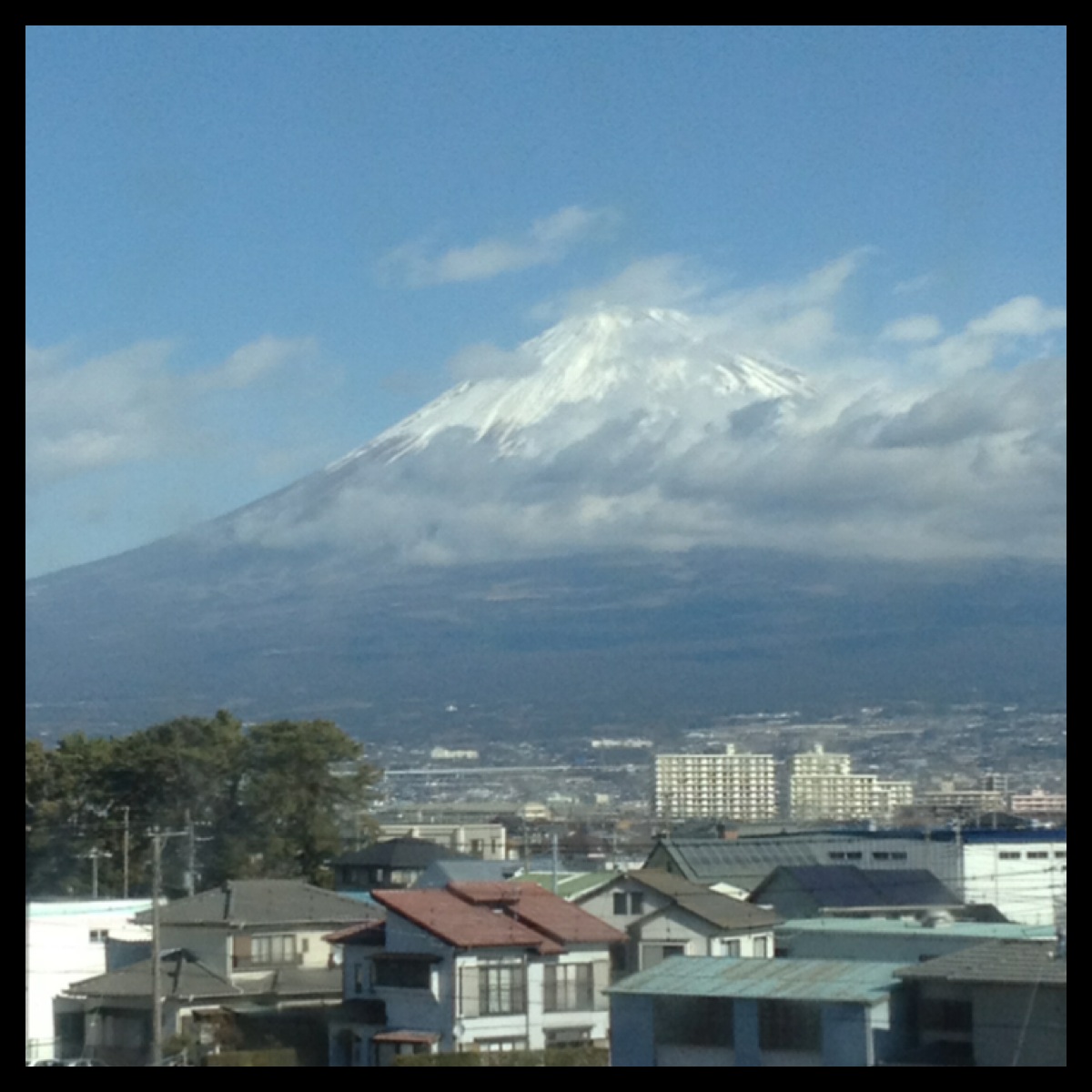
We are writing this blog post on the Shinkansen bullet train from Tokyo to Osaka. On Saturday 1/26 we (Joe and TashaRose) took the Shinkansen to Tokyo for our free weekend. The ride was so smooth and we even got a glimpse of beautiful Mt. Fuji along the way! After a quick 3 hour train ride we arrived at Tokyo Station in the heart of the world's largest city.

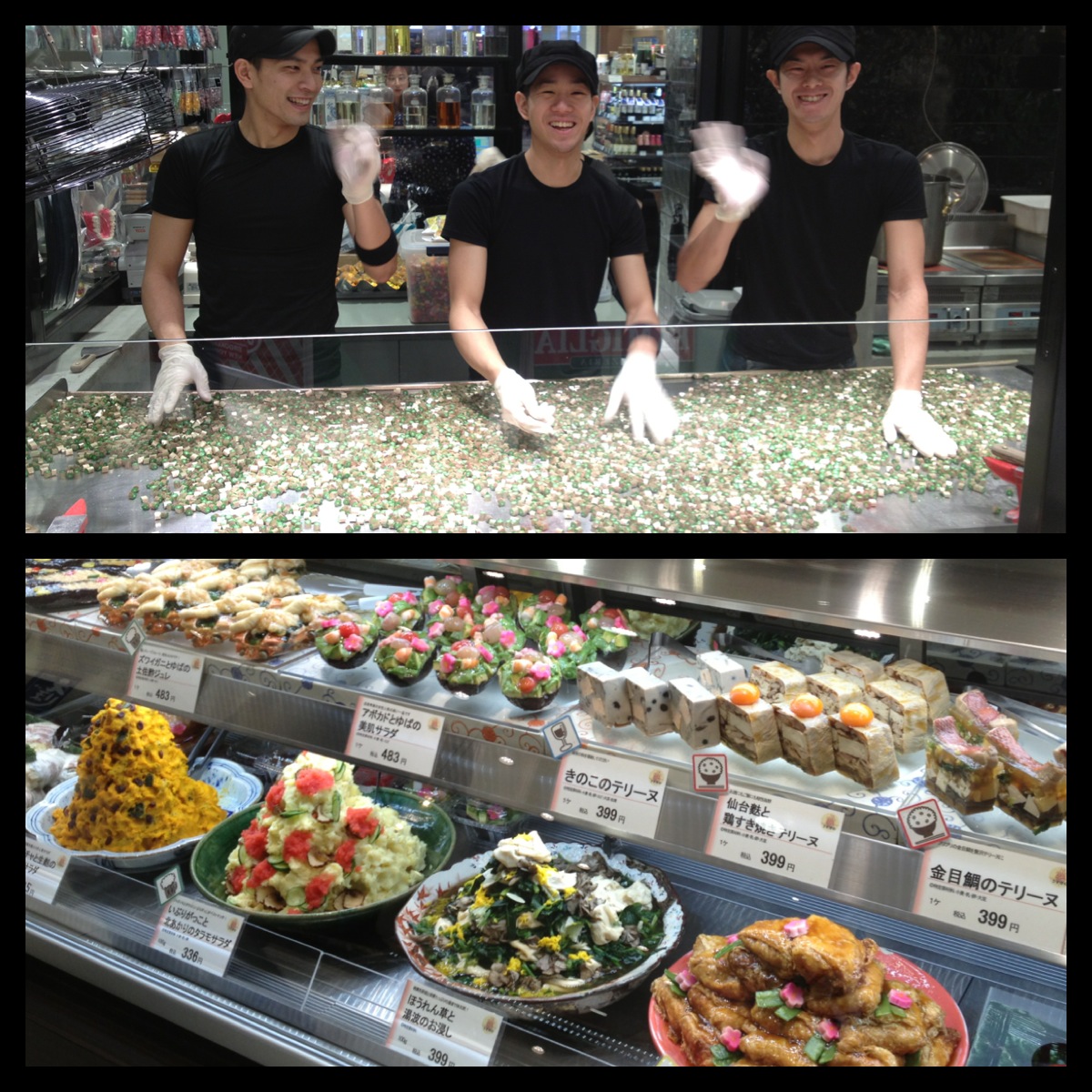
Tokyo Station is one of the world's largest commuter stations. Everywhere you look you see crowds of people, delicious restaurants, fancy stores, etc. We decided to explore a nearby 14 floor Daimaru department store. On the main floor we watched gourmet candy-making and admired the enticing displays of every kind of food imaginable. On the 10th floor we got to see beautiful kimonos and silk tapestries that were over ¥1,000,000.00!

After a quick lunch we walked through the vast gardens of the Imperial Palace. 

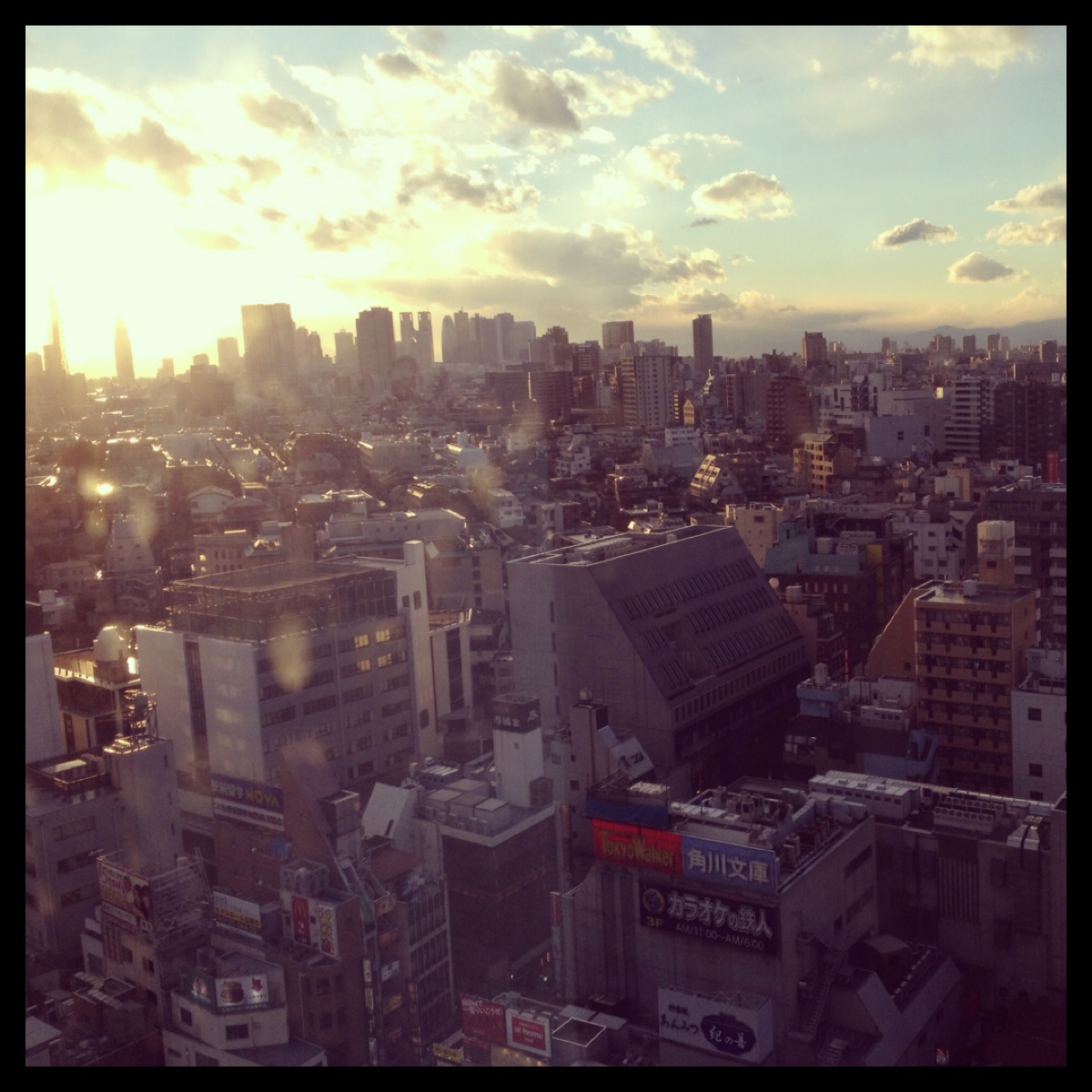
After unsuccessfully explaining our destination to two different taxi drivers, we made it to our hostel on foot by 4pm. Tokyo HI hostel was located on the 18th floor of a high-rise building in the Shinjuku area. We had an incredible view of the city (a small section of it) from our room. The city was far more expansive than we had ever imagined!

After an hour of being off our feet (we calculated that we walked at least five miles that day and our feet were killing us!) we went to an Indian restaurant for a vegetarian dinner. We were amused that the music in the restaurant wasn't Indian sitar music but American country-western songs. 

After dinner we set out for the neon-lights of Shibuya crossing which is known as the "Times Square of Tokyo" but after experiencing the incredible crowds and stampede of pedestrians rushing across the immense intersection, we think Times Square should really be called the "Shibuya Crossing of America". We spent the next few hours wandering in awe at the cacophony of music, people, and traffic. We noted that Tokyo had many more gaijin (foreigners) than Osaka. We walked around for another couple hours and eventually made it back to our hostel and collapsed into bed.

On Sunday morning we visited Tokyo Tower which was the highlight of our weekend. We were able to view the whole city of Tokyo from 155 meters above street level. At the base of Tokyo Tower there was an event taking place in which local firefighters climbed the stairs in Tokyo Tower as part of a competition. There was a street fair atmosphere including food made by the local firefighters who prepared their own recipes for the crowd. After we snapped some photos with some large costumed caricatures we crammed into a small elevator with a dozen or so fellow sightseers. The 360 degree view of Tokyo was unforgettable and we were thrilled to again see Mt. Fuji, a full 95 kilometers to the west. 

Our time in Tokyo (only 28 hours) was an experience of a lifetime!!
By TashaRose  and Joe


Arima Onsen and Women's Cars

This past Sunday Katrina, Stacie and Chong trekked to the mountainside town of Arima Onsen to partake of an onsen or Japanese hot springs baths. As we were a small all women group we decided to experience the "Women Only" rail cars. This car is clearly marked "Women Only" in pink boxes all over the car. The platform is also marked the same way so We were rather surprised to see men in this car as we have heard again and again about how the Japanese are very strict rules followers. Some men would enter the car, realize where they were and move to another car. Others just sat down and remained in the car. This happened on all portions of our train ride. Hmmm... We found a wonderful bakery in the Sannomiya train station. We each purchased a few treats and decided to sit down to enjoy them before heading out to Arima. These were the BEST bakery items that we have experienced. We decided before leaving the bakery that we needed to make a stop on the return trip. The train ride to Arima Onsen takes one out through the developed town and into a more rural area where the homes are not as tightly condensed together. There are garden patches, bamboo clusters, and mountains visible from the train. The town of Arima Onsen seems to be built right onto the mountainside and is divided by a sculpted creek. The town is very easy to navigate and quite serene. The serenity of the town is needed to propel one up the very steep walk to our final destination of Arima Onsen Taiko-no-yu. This particular bath house was selected because it has both the gold and silver water. The bath experience is like nothing in the United States. In Japan public bathing is done completely naked. The bathing facility is equipped with washing areas off to the side. Upon entering the bath area everyone scrubs down with soap and water. Once clean, you can enter the baths. This facility has an indoor bathing area and a rooftop bathing area. The indoor bath is what you would expect it to be. The rooftop area is definitely our favorite as you cold experience the cooling temperatures of the day.s weather while relaxing in the hot pools. Baths are enjoyed by all ages. We saw small children to women in their late sixties. We spent about three hours there and came away completely relaxed. We absolutely recommend that everyone experiences an onsen. All you need is a sense of adventure and a willingness to walk around in your birthday suit.

Written by Chong Lee

Sunday, January 27, 2013

Touring Osaka

We've spent most of our time on this trip in Osaka. Yesterday, Martha, Jodie and I were honored to be given an insider's tour of Osaka by one of our new friends we met at the US Consulate, Minami-san. She is an interpreter who speaks French, English, Arabic and Japanese. She took us to Shinsaibashi for some fun shopping and then down to Namba. We ate takoyaki for lunch -- yum!

We visited the Hozneji Temple where we saw Mizukake Fudo. I am struck by how integrated the temples are. We were walking down a chaotic busy street and suddenly Minami-san told us to take a right or a left turn and suddenly we were in a quiet, peaceful alley where people were taking a quick break to pray. Exercise is integrated into daily life, too. We've walked miles every day, but it is part of how we travel to our destination. Working out isn't necessary - walking is just part of the daily routine of getting from point A to point B. I continue to be struck by the sheer size of the city. I can't imagine how one begins to know how to get around every part of it because it just goes on and on. But seeing all of the people out on Sunday - families, kids, older couples and young people - I felt like we finally got to see the vitality that was missing from the city during the week.

We walked through Sennichimae Doguyasuji and saw all kinds of restaurant kitchen supplies, including the infamous plastic foods. Most restaurants display their menu in the front window, illustrated with plastic molded food. We visited a supplier, and Martha was quick to pick up a green pepper - her favorite! 

We celebrated Martha's husband's birthday with cake and coffee at one of the many lovely department stores. The food is so fabulous and so beautifully prepared. We returned to our apartment to swap stories with our classmates who visited the sake museum and disaster reduction museum in Kobe. I can't wait to hear from our friends who traveled to Arima Onsen (hot springs) and those who went to Tokyo! 
Wigs for dogs!

Kabuki theater

Bridge in Osaka near Namba

Lovely manhole cover!

A display of plastic American food

On the way to the temple

A store where you can buy plastic food


Kobe

Today, Anne-Louise, Mimi and Kathy traveled by train to Kobe to visit a couple of museums.

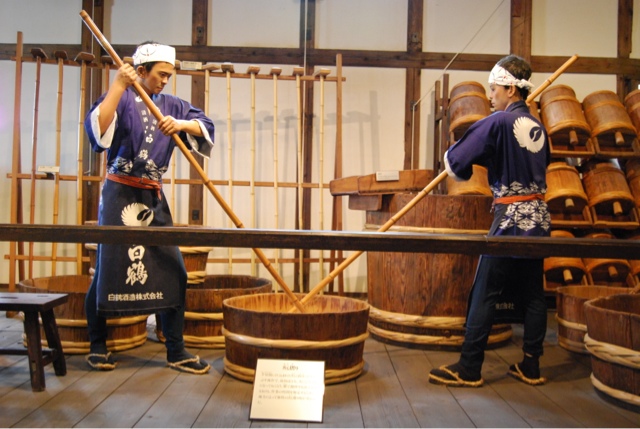
First, we went to the Hakutsuru Sake Brewery Museum. I've got some pics below. I was especially impressed that they had each of the stations narrated in Japanese AND English! What a relief to be able to actually understand what I was seeing for a change. I am challenged to find information stated in English, so sometimes when I admire a monument or a building, I simply have to admire it for what it appears to me to be. The reality is that there is probably some wonderfully amazing and historical story behind that particular item, and I have no idea what it may be because I haven't studied the Kanji symbols and therefore can't read the language.

Pics below are of the Sake Museum.

Next, we visited the Disaster Reduction and Human Renovation Institution. Here we watched a couple of videos (also narrated in English as well as Japanese!) about the earthquake in Kobe in 1995. The sights on those videos moved me to tears. I never really payed attention to the news about this earthquake 18 years ago -- perhaps it is because I am a typical American and too wrapped up in my own affairs to notice anything important going on in another part of the world. The impact of that earthquake was so important to the very community in which I was now standing. Over 6,400 lives were lost, tens of thousands were injured. The institution was about so much more than depicting the devastation. It was about Japan pulling together and creating the first (yes, the first) real organized volunteer program of this magnitude. It was about rebuilding, it was about recognizing that disasters like this cannot be prevented, but sharing knowledge and being prepared can reduce the impact of disasters like this in the future.